Oral cancer is a serious and potentially life-threatening condition that often develops without noticeable symptoms in its early stages. The good news? When detected early, oral cancer is highly treatable. That’s why oral cancer screening is such an essential part of routine dental care.
At Dripping Springs Family Smiles, we believe prevention and early detection are the foundation of lifelong health. In this article, we’ll explain what oral cancer screening involves, why it matters, who is at risk, and how a simple exam could truly save a life.
What Is Oral Cancer?
Oral cancer refers to cancers that develop in the tissues of the mouth or throat. It can occur on the lips, tongue, gums, the roof or floor of the mouth, the inner lining of the cheeks, and even in the back of the throat (oropharynx). Like many cancers, oral cancer can begin as subtle changes in tissue that may go unnoticed without a professional examination. Because early symptoms are often painless or easy to overlook, routine oral cancer screening plays a critical role in identifying concerns before they become more serious.
Why Oral Cancer Screening Matters
Early detection dramatically improves survival rates. When oral cancer is identified in its earliest stages, the 5-year survival rate can be as high as 80–90%. However, if it spreads before diagnosis, survival rates drop significantly.
An oral cancer screening allows dental professionals to detect abnormalities before they become advanced or harder to treat.
In many cases, patients have no idea that anything is wrong. They may not feel pain or notice visible changes. That’s why relying on symptoms alone is not enough.
What Happens During an Oral Cancer Screening?
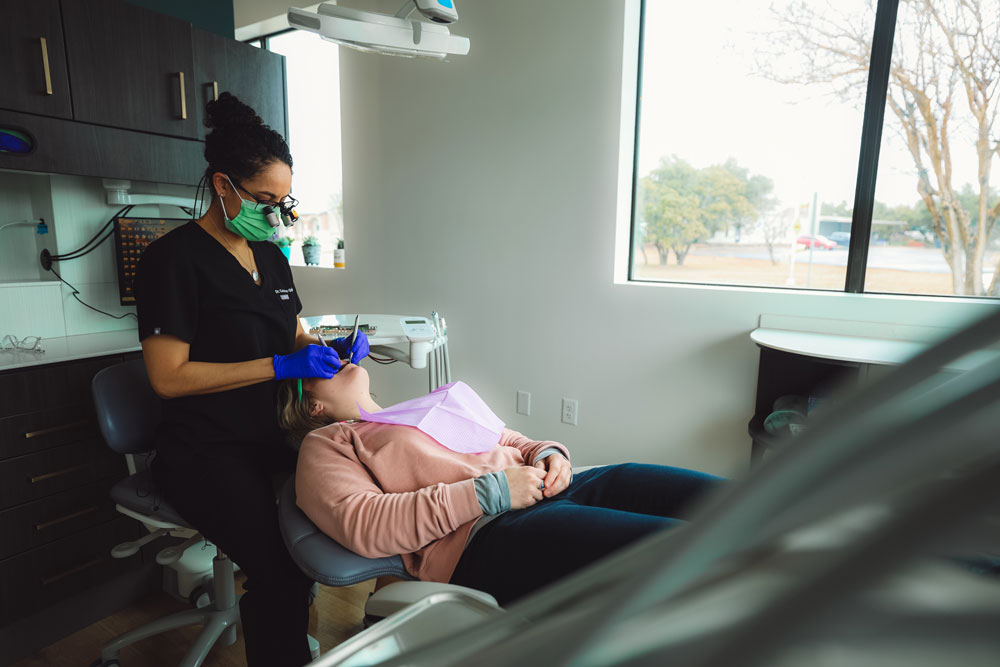
An oral cancer screening is quick, painless, and typically performed during your routine dental checkup.
Here’s what you can expect:
Visual Examination
Your dentist carefully examines your lips, tongue, gums, cheeks, roof and floor of your mouth, and throat. They look for:
- Red or white patches
- Unusual sores that don’t heal
- Lumps or thickened areas
- Changes in tissue texture
Physical Examination
The dentist gently feels the tissues of your mouth and neck to check for:
- Lumps
- Swelling
- Enlarged lymph nodes
Additional Screening Tools (If Needed)
In some cases, specialized lights or screening devices may be used to detect abnormal tissue changes not visible to the naked eye.
The entire process takes only a few minutes but provides critical insight into your oral health.
Who Is at Risk?
Anyone can develop oral cancer, but certain risk factors increase the likelihood:
- Tobacco use (smoking or smokeless tobacco)
- Heavy alcohol consumption
- HPV (human papillomavirus) infection
- Excessive sun exposure (lip cancer risk)
- Age 40 and older
- Family history of cancer
It’s important to note that a growing number of oral cancer cases are being diagnosed in younger individuals with no traditional risk factors, especially due to HPV-related cancers. This makes regular oral cancer screening essential for adults of all ages.
How Often Should You Get an Oral Cancer Screening?
For most patients, an oral cancer screening is recommended at least once a year. However, because it is often included as part of your routine dental exam, you may be screened every six months during your checkups.
If you have higher risk factors, your dentist may recommend more frequent evaluations.
Schedule Your Oral Cancer Screening Today
Your health is too important to leave to chance. Regular oral cancer screening is a small step that can have a life-saving impact. At Dripping Springs Family Smiles, we are committed to comprehensive, compassionate care, including thorough oral cancer screenings as part of your preventive dental visits.
If it’s been a while since your last dental exam, now is the perfect time to prioritize your health. Contact us today to schedule an appointment. We proudly serve Dripping Springs, TX and the surrounding areas.